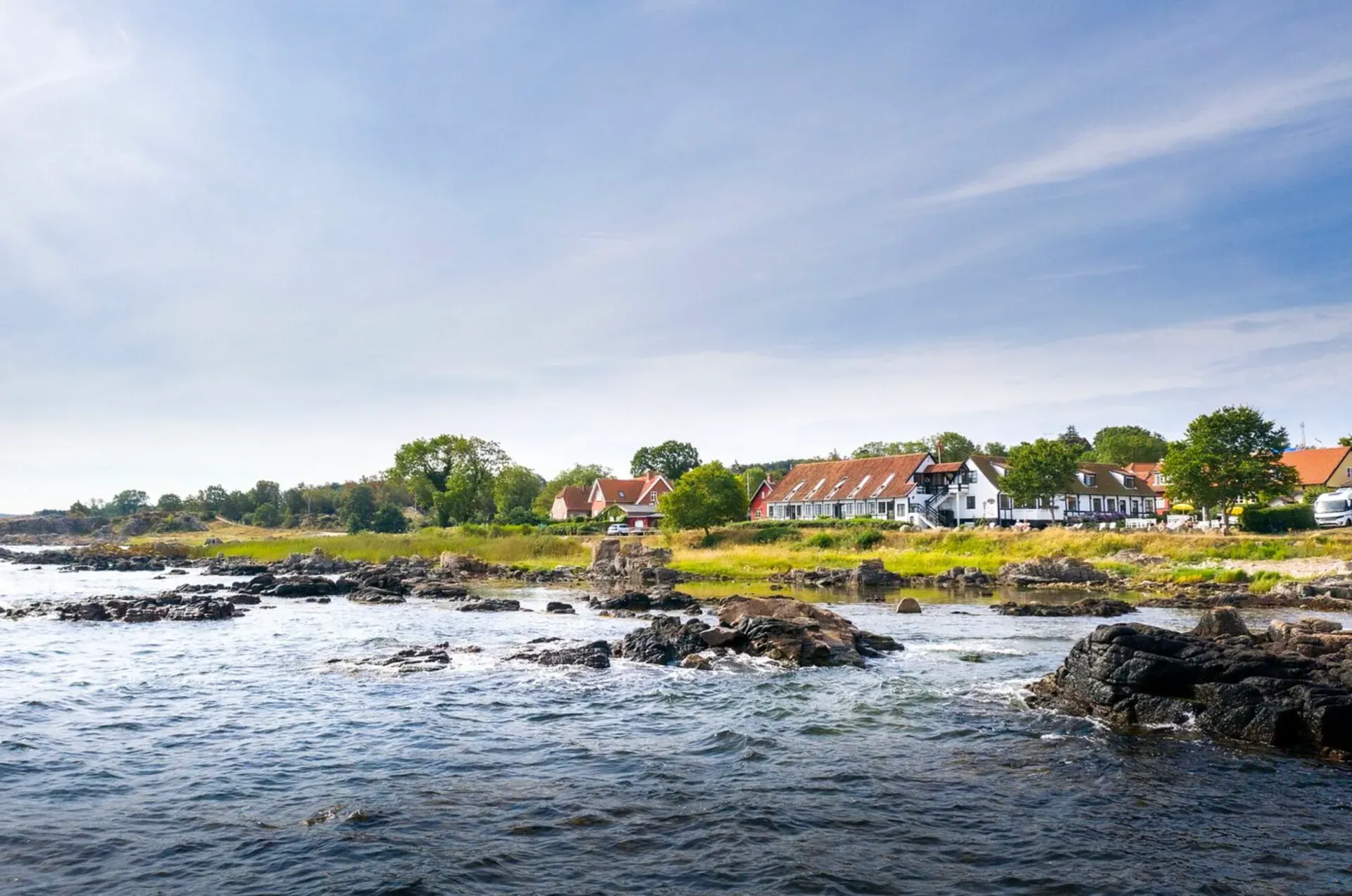
If you have spent any time looking at hotels in Denmark, you have probably come across the word badehotel. It does not translate neatly. A badehotel is not a spa. It is not a beach resort. It is something more particular than either — a type of coastal hotel that has existed in Denmark since the late 1800s and that carries with it a set of expectations about what a holiday by the sea should feel like.
The word itself is straightforward: bade means bathing, hotel means hotel. But the tradition it points to is richer than the sum of its parts.
Where the tradition comes from
In the second half of the nineteenth century, European physicians began prescribing sea bathing as a treatment for everything from tuberculosis to nervous exhaustion. The idea was that cold salt water, combined with fresh coastal air, had restorative properties.
Denmark, with its hundreds of kilometres of coastline, was well suited to this.
The first badehotels appeared in the 1880s and 1890s, primarily along the coasts of North Jutland, the Danish Riviera north of Copenhagen, and on islands like Bornholm. They were simple places — large wooden buildings near the water, with wide verandas, communal dining rooms, and an atmosphere somewhere between a sanatorium and a summer house. Guests came for weeks at a time, not days. The pace was slow. The point was to be idle in a place where idleness felt appropriate.
Around the same time, the Skagen Painters — a group of Scandinavian artists including P.S. Krøyer, Anna Ancher, and Michael Ancher — were gathering at the northern tip of Jutland, painting the light and the sea and the particular quality of Danish summer evenings. Their work helped create the cultural mythology of the Danish coast as a place of creative retreat and contemplation. The badehotel was where this mythology had an address.
What makes a badehotel different
A badehotel is defined more by atmosphere than by amenities. There is no international standard, no star rating, no checklist. But certain things tend to be true.
The building is usually old, or at least looks it. Many badehotels occupy original nineteenth-century structures. The architecture tends toward the vernacular: painted wood, pitched roofs, shuttered windows. There is a relationship with the landscape that feels earned rather than engineered.
The dining room matters. Badehotels have historically been places where the evening meal is an event — long, unhurried, centred on local ingredients. Food is not necessarily elaborate, but it is taken seriously. On Bornholm, that means smoked fish, island cheeses, vegetables from nearby farms, and bread baked that morning.
There is an absence of the things that define modern hospitality. No minibar. No room service button. No lobby bar with ambient music. The entertainment is the sea, the light, the walk before dinner, the book you have been meaning to read. Badehotels are places designed for a particular kind of doing nothing.
The decline and return
By the mid-twentieth century, many badehotels had closed. Package holidays to southern Europe offered guaranteed sunshine. The old wooden buildings were expensive to maintain. Some were converted to apartments or left to decay.
The revival began in the early 2000s. A new generation of owners — many of them from outside the hotel industry — started buying and renovating badehotels with a sensibility that valued the original character of the buildings. The TV series Badehotellet, which premiered in 2013 on TV 2 and ran for ten seasons, brought the concept back into popular Danish consciousness. Set in a fictional North Jutland badehotel in the 1920s, it made the tradition feel both nostalgic and alive.
In 2016, the historic Svinkløv Badehotel in North Jutland burned to the ground. The loss was treated as a national cultural event. It was rebuilt, and its reopening became a symbol of what badehotels mean to Danish identity: not just hotels, but custodians of a particular relationship between people, architecture, and the sea.
Allinge Badehotel
Our building in Allinge, on the northern coast of Bornholm, dates to 1774. It has been many things over the centuries. In 1851, King Frederik VII and his wife Countess Danner stayed here during a visit to the island, a fact we know from historical records and which gave our finest room its name: the Countess Danner Suite.
Christian and Cathrine bought the hotel in 2020, during the pandemic, without prior hotel experience but with a clear idea of what a badehotel should feel like: unhurried, design-conscious, rooted in its place. The renovation preserved the building’s original timber framing and proportions while updating every room with furnishings by Danish designers. Read more about us.
Allinge Badehotel is awarded One MICHELIN Key in 2026. Our organic breakfast, sourced from Bornholm producers, has become one of the things guests mention most.
We are a badehotel in the fullest sense of the word: a coastal hotel where the sea is the main event, the building has history, the food is local, and the pace is set by the tide rather than a check-out time. Explore our rooms to see what that looks like.